
June 10, 2026
An Exclusive Interview with the President of the Egyptian Golf Federation: Omar Talaat Moustafa: Vision, Ambition, and the Future Ahead
Egyptian golf is no longer operating quietly in the background. Over the past year, the sport has undergone one of the most significant transformations in its modern history, driven by a new vision focused on international expansion, youth development, and sports tourism. Under the leadership of Omar Hisham Talaat Moustafa and the Egyptian Golf Federation, Egypt has re-entered the global golf conversation through the revival of historic tournaments, the launch of ambitious international series, and a renewed effort to position the country as a premier golf destination.
In an exclusive interview with Sports & Fitness Magazine, Omar Hisham Talaat Moustafa discusses the philosophy behind “Golf in Egypt,” the challenges faced by the Federation, and the long-term strategy to turn Egypt’s unique combination of history, climate, and infrastructure into a global sporting success story.
Love of Golf
“Golf is the only game where the referee is your own conscience.”
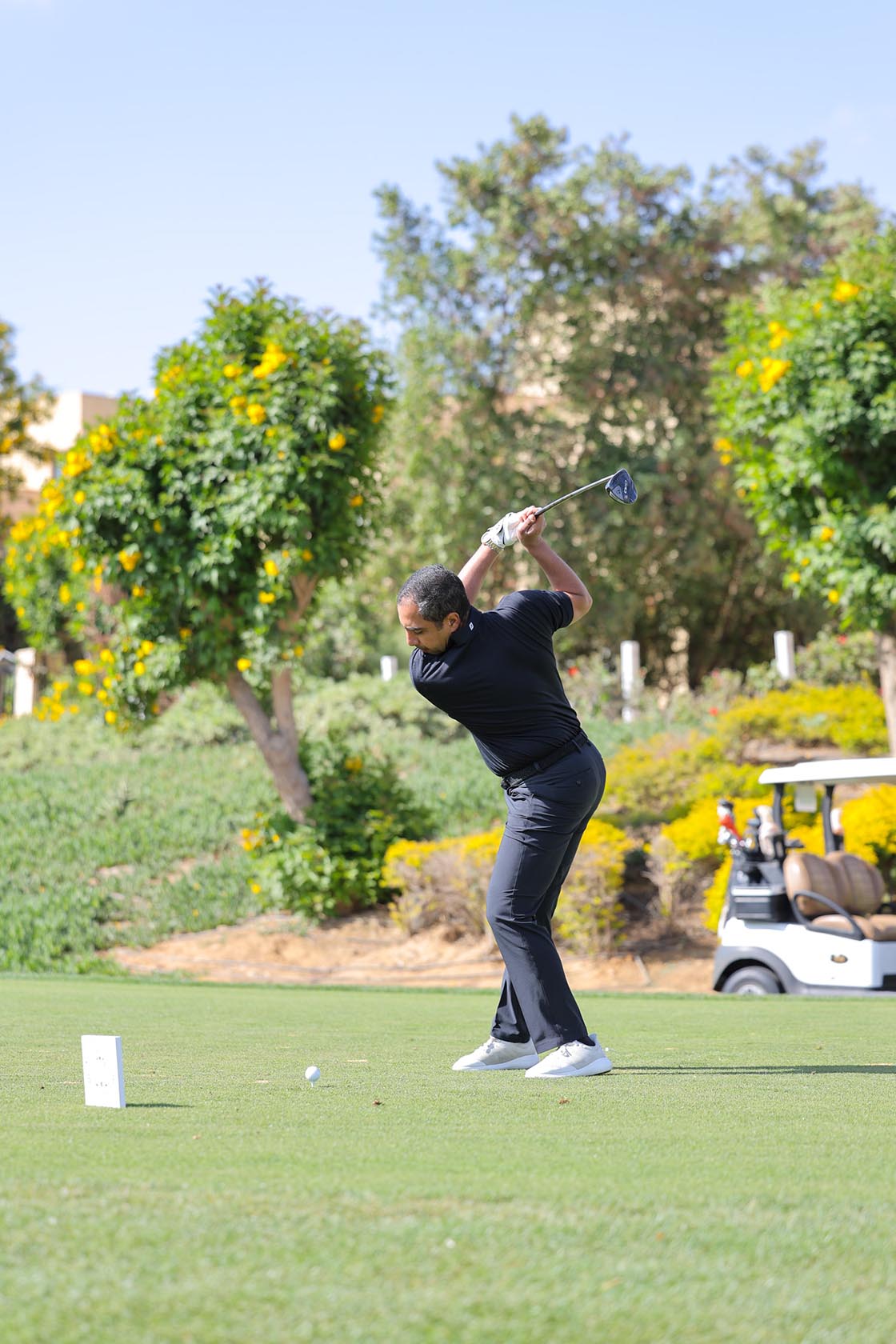
Before discussing the transformation of Egyptian golf, Omar Hisham Talaat reflected on the personal journey that first introduced him to the sport and the values that ultimately shaped his connection to it. “I came to golf around 2018. At the time, I was looking for something that would let me break a high-intensity routine and switch off on the weekends, but I didn’t want to switch off completely. I wanted something that would still challenge me and let me practice self-discipline, just in a calmer, more enjoyable setting. Golf turned out to be exactly that. What attracted me most is its character and philosophy. It is one of the very few sports where you are effectively your own referee. Nobody is watching every shot; you call your own penalties. The game teaches honesty, discipline, patience, focus, and respect for the rules and for the people you play with.” Delving deeper into the subject, he continues by saying, “Golf is not just a sport to me, it is a way of thinking. In business, and in real estate development, it is the same discipline: you read the terrain carefully, you think several shots ahead, you stay calm under pressure, and you plan every move before you execute it. I play once or twice a week as time allows, and I practice other sports too, but golf is the one whose lessons follow me into the office…. And honestly, these are the values our young people need most today: patience, integrity, and the discipline to play the long game.” Omar’s perspective ultimately frames golf not simply as a recreational pursuit but as a discipline built around long-term thinking, self-regulation, and strategic patience. Themes that would later become central to the Federation’s broader approach toward restructuring and expanding the sport in Egypt
The Situation at the Door
Underneath the surface of Egypt’s expanding golf infrastructure lay a far more uneven reality, one that only became clear once the Federation began to map the sport in full. When reflecting on the state of Egyptian golf upon assuming leadership of the Federation in late 2024, the President of the Egyptian Golf Federation Omar Hisham Talaat, described an initial exercise focused less on strategy and more on confronting the full structural reality of the sport. “When I became President of the Federation in November 2024, I sat with my team in our very first board meeting, and we did one thing before anything else; we laid out the complete picture. What do we actually own? And the honest answer surprised even us.” Delving into that assessment, he continued, “What we had in front of us: more than 22 golf courses operating across Cairo, Alexandria, the North Coast, and the Red Sea; an ideal year-round playing climate; a diverse tourism landscape stretching from the Pyramids to the Mediterranean and the Red Sea; and a historical legacy spanning more than a century, including tournaments like the Egyptian Open founded in 1921 and played by figures such as Bobby Locke and Gary Player.” He went on to contrast this with the underlying constraints, noting “An estimated 1,800–2,000 players in total, fewer than 1,000 registered with the Federation, 15 years since the Egyptian Open had been staged, no unified national strategy, and a heavy dependence on government funding.” His assessment ultimately framed Egyptian golf as a system defined not by a lack of assets, but by underutilization and structural fragmentation, a disconnect between potential capacity and actual output that set the foundation for the reform agenda that followed.
The Vision
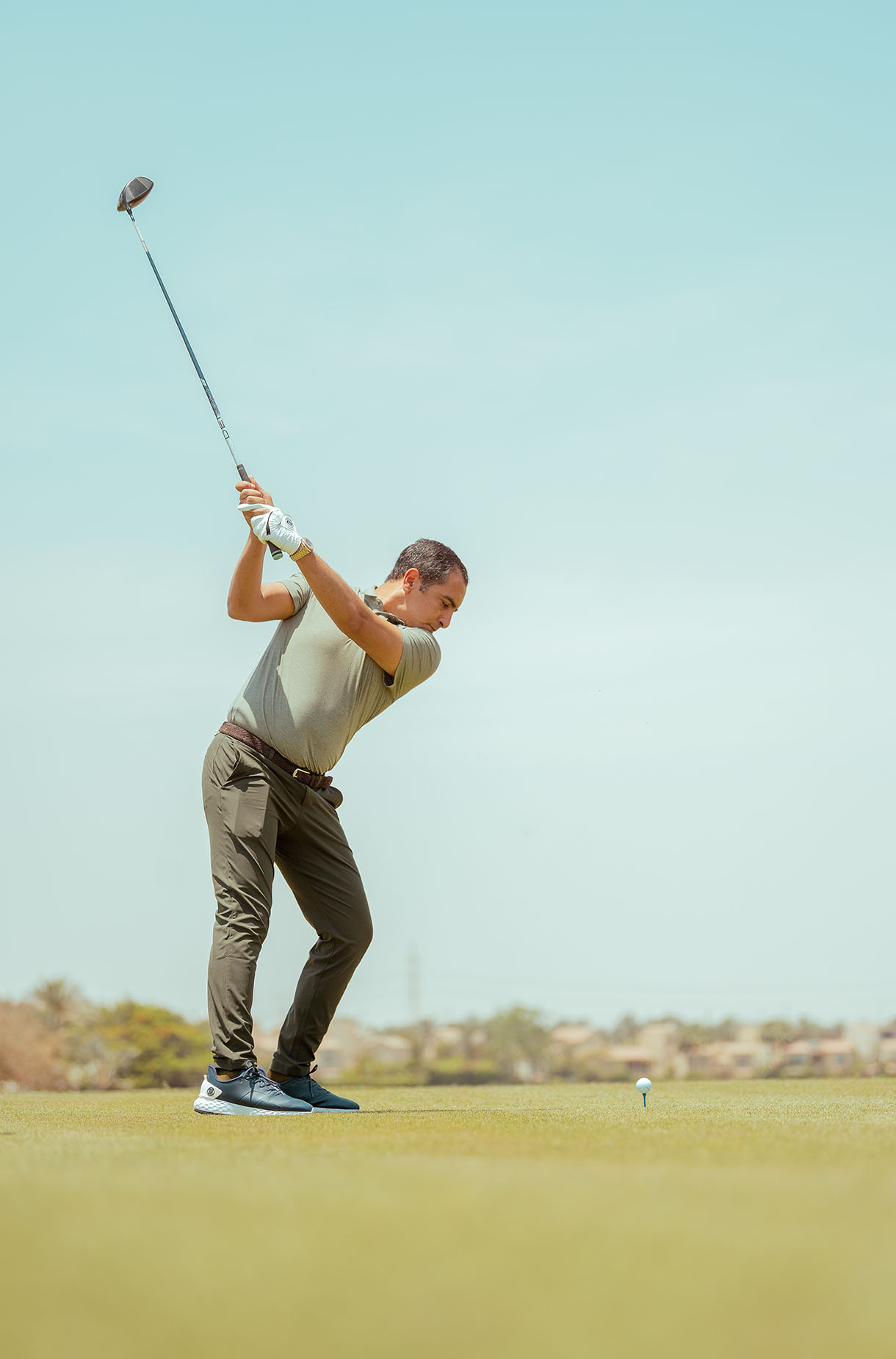
Turning structural diagnosis into strategic direction, in his words, required a shift from inventorying Egypt’s golf assets to defining a coherent national value proposition for the sport. Omar Hisham Talaat explained, “We started by defining Egypt’s unique value proposition as a golf destination. We worked with international experts and strategic partners, including those who helped shape golf strategies in Saudi Arabia and within the Arab Golf Federation, and we drew on guidance from the R&A in St Andrews, to understand what truly sets Egypt apart.” He continued by distilling that positioning into a clear comparative advantage, stating, “Egypt offers a combination very few countries on earth can match: year-round sunshine, world-class courses, ancient history and living culture, both the Mediterranean and Red Sea coastlines, competitive value for money, and a strong hospitality infrastructure.” Delving further into the strategic framework, he added, “From there we built two parallel objectives, growing the game locally by increasing participation and activating underutilised facilities, and positioning Egypt internationally through certified tournaments, broadcasting, tourism partnerships, and large-scale media exposure.” The outcome was framed as deliberately structural rather than promotional, concluding, “We weren’t building a tournament calendar. We were building a destination.”
Local Participation
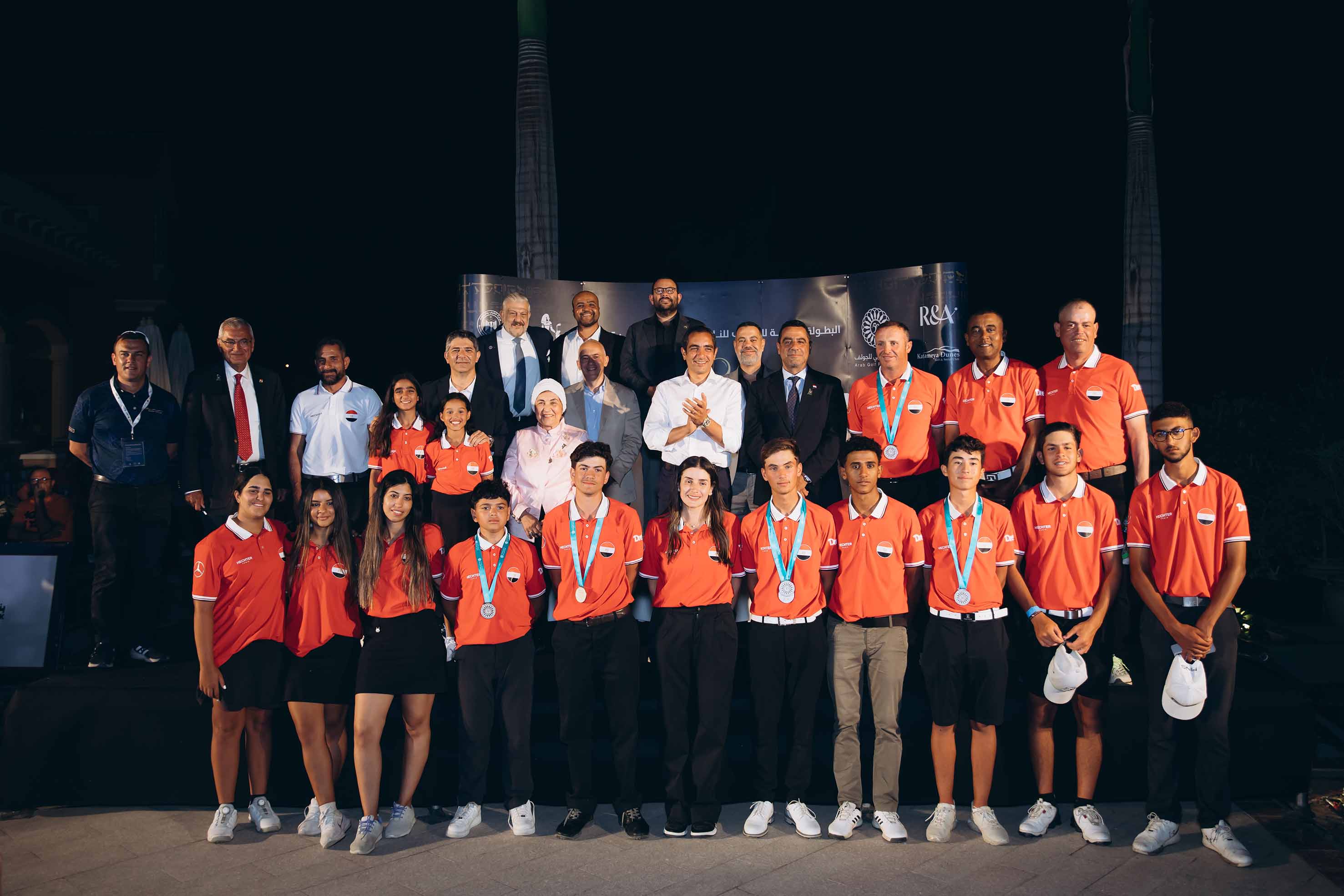
In a sport traditionally defined by exclusivity, the Federation achieved a significant 25–30% increase in participation over just one year. Omar Hisham Talaat noted that this growth is merely a foundation, driven by a strategy to “open the gate” rather than guard it. This philosophy was evidenced at the 2025 Pan-Arab Junior and Ladies Championship, which was transformed into a public festival featuring family activities and beginner programs. By leveraging televised coverage and school outreach, the Federation has successfully repositioned golf as an accessible public sport, integrating it into Egypt’s cultural and athletic landscape.
A Historic Year
A shift in tempo defined 2025, not through incremental development, but through the consolidation of multiple international events into a single operational cycle that tested and ultimately validated Egypt’s capacity as a host nation. Omar Hisham Talaat Moustafa explained, “Because we moved from planning into execution, in a single year, Egypt hosted five major international tournaments” before outlining a calendar that included the Pan-Arab Junior and Ladies Championship, multiple national amateur and junior events, the return of the Egyptian Open after 15 years, and the Red Sea International Professional Championship in Sokhna. He underscored the symbolic weight of this transition, stating, “2025 was the year Egyptian golf stopped planning and started delivering.” Beyond the scheduling density, he positioned the year as proof of institutional capability, pointing to international participation and hosting standards as evidence that Egypt could operate at scale within the global golf system. He also acknowledged the structural support behind this expansion, referencing the backing of the Ministry of Youth and Sports, while noting his election to the Executive Office of the Arab Golf Federation as a parallel indicator of regional confidence. Taken together, the year served less as a standalone milestone and more as an operational stress test confirming Egypt’s readiness to consistently host international-level golf events.
2026 Golf Series
Positioned as the next structural step after a year of intensive execution, the Egypt Golf Series 2026 represents a shift from isolated tournament delivery to a sustained competitive ecosystem that operates throughout the season. Omar Hisham Talaat described it as “The largest professional golf calendar in Egyptian history, and that is a statement backed by numbers, not marketing,” before outlining its scale, including 13 international tournaments hosted over four months across Egypt’s leading courses. He emphasised that its significance lies not only in volume but in structural access to global pathways, noting that “every tournament awards Official World Golf Ranking (OWGR) points and World Amateur Golf Ranking (WAGR) points.” Expanding on this, he added, “For the first time, an Egyptian golfer can earn a world ranking without leaving Egypt,” framing the initiative as a critical development pipeline rather than a standalone event series. Taken together, the Series reflects a deliberate attempt to localise elite competition frameworks, embedding long-term athlete progression and Olympic qualification pathways within Egypt’s own sporting infrastructure.
The Return of Egypt Open
A tournament framed by history and interrupted momentum, the return of the Egyptian Open functioned as both a symbolic reset and a practical test of Egypt’s ability to re-enter established international golf circuits after a 15-year absence. Omar Hisham Talaat Moustafa explained its significance by first anchoring it in legacy, noting that it dates to 1921 and has featured some of the sport’s most recognisable names, including Bobby Locke, Colin Montgomerie, and Rory McIlroy. He then shifted to what its revival represented in operational terms, stating, “Its return after 15 years was about much more than reviving a tournament. It was Egypt walking back onto the international golf stage,” before outlining its structural components, including a four-year partnership with the Asian Development Tour, participation from 35 countries, and international broadcasting coverage. He underscored the symbolic break with the past through the line, “A 15-year silence ended, and the world was watching when it did.” Taken together, the event functioned less as a standalone sporting occasion and more as a re-entry mechanism into global competition frameworks, re-establishing Egypt’s presence within the international golf calendar while laying the groundwork for its future positioning as a recurring destination rather than an occasional host.
Tourism & Economic Impact
The Egypt Golf Series 2026 marks a strategic shift from local participation to measurable economic impact, positioning golf as a high-yield contributor to the national tourism economy. Omar Hisham Talaat Moustafa noted that the Series is projected to attract 2,000 international visitors, generate $5.5 million in direct spending, and account for tens of thousands of hotel nights alongside millions of global digital impressions. He emphasised that the "golf tourist" represents a premium demographic, visitors who stay longer, spend more, and travel during the winter off-season. This model reframes golf as a demand catalyst that drives growth across the aviation, hospitality, and retail sectors, converting sporting events into recurring drivers of national investment.
Media Coverage
The Federation’s media strategy became a key instrument in shifting golf from a niche, low-visibility activity into a widely broadcast national brand. Omar Hisham Talaat outlined this approach as a three-pillar framework, beginning with domestic media partnerships through ON Sport and United Media Services that brought Egyptian golf to mass audiences for the first time. He then extended this to an international dimension, explaining that partnerships with global tours enabled Egypt’s courses and landscapes to be broadcast across multiple markets, effectively turning tournaments into platforms for tourism exposure. The third pillar focused on format design, with events intentionally structured as hybrid sporting and entertainment experiences incorporating family activities, live music, and public engagement zones. He summarised the strategic intent with the statement, “We didn’t just broadcast a golf tournament, we broadcast Egypt.” Taken together, this approach repositioned golf away from its traditional elite framing and toward a more accessible media product, designed to integrate sport, entertainment, and national branding into a single viewing experience.
The Future
Framed as the next phase of development rather than a continuation of existing expansion, the future of Egyptian golf infrastructure reflects an effort to convert geographic and historical assets into a connected national course network that simultaneously supports tourism, competition, and destination branding. Omar Hisham Talaat Moustafa described this pipeline as a series of strategically significant projects, including SouthMED Golf Course on the Mediterranean coast, Sharm Bay Golf Course in Sharm El Sheikh, and the redevelopment of the historic Mena House course in front of the Pyramids. He emphasised that these developments are not isolated investments but components of a broader spatial vision, stating that the long-term goal is “A complete Egyptian golf journey that links Cairo, the Mediterranean, and the Red Sea into one trip.” This positioning reframes infrastructure growth as an integrated tourism architecture rather than as fragmented course development, in which geography itself becomes part of the product offering.
Transformation
Positioned as a shift from dependency to operational independence, the Federation's financial restructuring was framed less as a short-term correction and more as an institutional redesign of how sport administration generates and sustains value. Omar Hisham Talaat Moustafa outlined this transformation around four core pillars, beginning with the redefinition of relationships with private-sector course owners as strategic partnerships rather than passive asset arrangements. He then pointed to the expansion of sponsorships and media rights as a new revenue stream enabled by the increased international profile of Egyptian tournaments, alongside direct income from international participation across a growing global field. A further structural change was the creation of a dedicated commercial arm designed to operate with market logic rather than traditional administrative constraints. He summarised the significance of this shift by stating, “The Federation used to be a line in the budget. Today it contributes to the economy.” Taken together, these changes reposition the Federation from a financially dependent governing body into a more self-sustaining institution, aligning its operational model with broader economic objectives tied to sports tourism, investment, and long-term sector growth.
Closing
The revival of Egyptian golf under the presidency of Omar of the Egyptian Golf Federation marks a rapid transformation, moving the sport from a fragmented, underutilised asset into a self-sustaining national sector. This ambitious strategy, which frames golf not merely as a game but as a discipline of “long-term thinking” and “strategic patience,” has successfully targeted two parallel objectives: building a premier international golf destination and radically expanding local participation. Through the successful hosting of major international events, the launch of the OWGR-affiliated 2026 Golf Series, and a bold media strategy that puts Egypt on the global golf map, the Federation has re-established the nation on the global golf map. Structurally, the financial overhaul has repositioned the Federation as an economic contributor, driving high-yield tourism and investment, supported by a vision for a connected golf journey linking Cairo, the Mediterranean, and the Red Sea. Ultimately, the success of this “Golf in Egypt” vision is measured not only in tournament density or economic impact but in its commitment to fostering integrity, patience, and discipline, the essential values that promise a robust, long-term pipeline for the sport’s next generation.
The Most Popular ‘Bandersnatch’ Choices Show We're Not All Complete Monsters
BY: Taylor Hosking
The Most Popular ‘Bandersnatch’ Choices Show We're Not All Complete Monsters
BY: Taylor Hosking
The Most Popular ‘Bandersnatch’ Choices Show We're Not All Complete Monsters
BY: Taylor Hosking
suggestions
-

Golf
Omar H. Talaat Moustafa
An Exclusive Interview with the President of the Egyptian Golf Federation
-
Golf
The Egyptian Golf Series
Mohamed Anwar Explains a New Era for Golf in Egypt
-
Golf
Inside the PGA Championship
Power, Pressure, Prestige
-
Golf
The Golden Jubilee of Moroccan Golf
A Legacy of Prestige, Vision and Excellence at the Hassan II Trophy
-
Golf
Beyond the Fairway
Unpacking the Golf Sports Ecosystem and High-Potential Avenues for Modern Startups”
-
Golf
The Top 5 Women’s Golfers 2026
From Thitikul’s poise to Korda’s power, the five players who define the pinnacle of the women’s game
Golf
Omar H. Talaat Moustafa
An Exclusive Interview with the President of the Egyptia
Golf
The Egyptian Golf Series
Mohamed Anwar Explains a New Era for Golf in Egypt
Golf
Inside the PGA Championship
Power, Pressure, Prestige
Golf
The Golden Jubilee of Moroccan Golf
A Legacy of Prestige, Vision and Excellence at the Hassan II
Golf
Beyond the Fairway
Unpacking the Golf Sports Ecosystem and High-Potential Avenu...
Golf
The Top 5 Women’s Golfers 2026
From Thitikul’s poise to Korda’s power, the five players who...