
August 16, 2026
How the Moneyball Method Rewired Football
In 2002, Billy Beane took a baseball team with one of the smallest payrolls in Major League Baseball and, through cold statistical analysis rather than gut instinct, built a roster that competed with clubs spending three times as much. The story became a book, then a film, and eventually a shorthand for an entire philosophy: find the value the market has missed, buy low, develop smart, and let the numbers do the talking. Football took its time catching on, largely because the sport resisted the idea that something as fluid and chaotic as a ninety-minute match could be reduced to data. Two decades later, that resistance has crumbled. A handful of English clubs, led by Brentford and Brighton, have proven that a well-built statistical model can outperform a fat wallet, while some of the wealthiest clubs in the world have proven, often painfully, that money without method is no guarantee of anything at all.
Brentford and the Blueprint
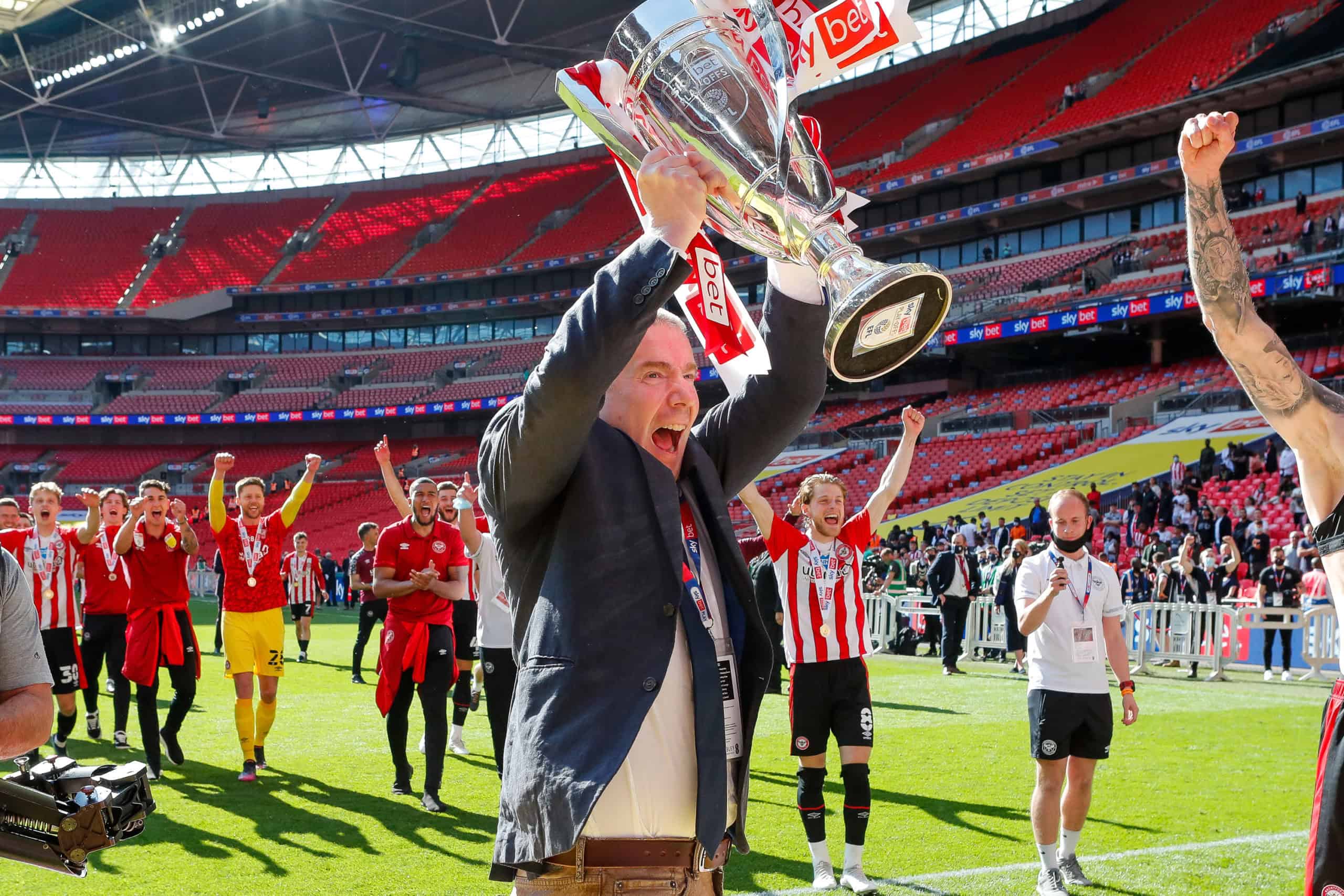
No club tells this story better than Brentford. When Matthew Benham took control in 2012, he was not a typical football owner. He had made his fortune through SmartOdds and Matchbook, two companies built on finding tiny statistical edges in sports betting markets, and he brought that exact mindset to a west London club that had spent decades bouncing around the lower divisions. Benham's philosophy was simple in theory and brutally difficult in practice: identify players whose underlying numbers, their expected goals, their expected assists, their pressing output, suggested they were better than their transfer fee implied, sign them before anyone else noticed, develop them inside a structure built for growth, and sell them on once their value peaked.
The results speak for themselves. Brentford built a recruitment department that scoured leagues most Premier League clubs would never think to check, the second division in France, the lower tiers of Danish and Scandinavian football, unfashionable corners of the market where undervalued talent tends to hide. Names like Ollie Watkins, Neal Maupay, Said Benrahma and Bryan Mbeumo arrived for modest fees and left, or thrived, for many times that amount. Brentford reached the Premier League in 2021 and has stayed there since, doing so on a budget that would barely cover the wage bill of a mid-table rival. Rasmus Ankersen, who helped shape the club's recruitment department, once summarised the entire approach in a single sentence; the key is finding undervalued talent, developing it, and selling it on for a profit, gradually building more value into the squad with every cycle. It is not a complicated idea. It is simply one that requires enormous discipline to execute without deviation.
Brighton, and the Danish Laboratory Behind It
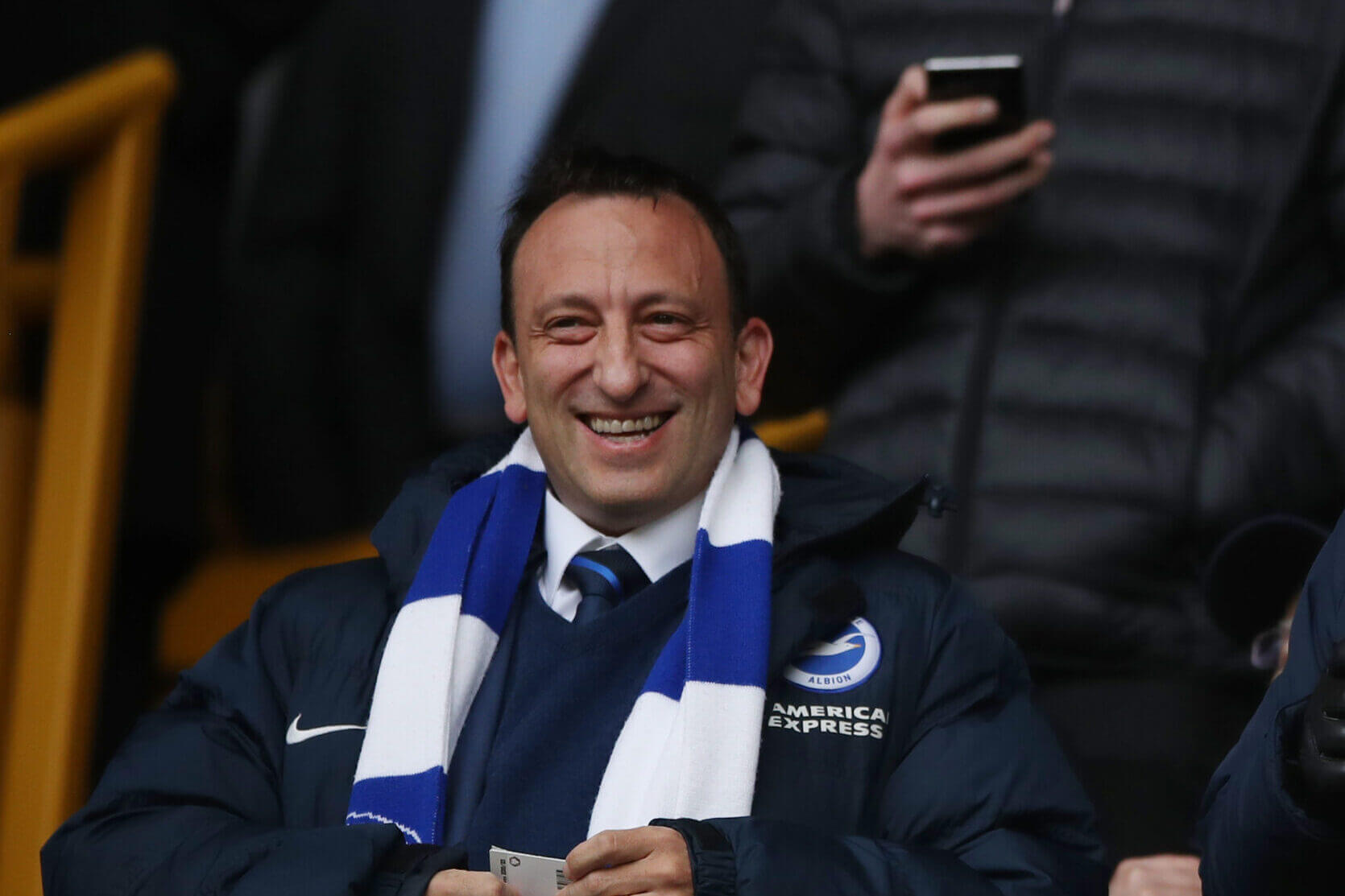
Brighton and Hove Albion tell a strikingly similar story, and the parallel is not a coincidence. Tony Bloom, like Benham, made his money as a professional gambler, running a betting consultancy called Starlizard that built its edge on precise probabilistic modelling. When Bloom took control of Brighton, he applied the same logic to a club that had been fighting relegation from League One barely more than a decade before he steered them into the Premier League and eventually into European competition. Brighton's recruitment has become the envy of English football, built around a proprietary data model so closely guarded that even some staff inside the club do not fully understand how it works.
The proof is in the sales ledger as much as the league table. Moises Caicedo arrived from Ecuadorian football for around four and a half million pounds and left for a British record fee north of one hundred million. Marc Cucurella, Alexis Mac Allister and Yves Bissouma all followed similar arcs, signed for modest sums, developed inside a system built to extract maximum value, then sold at a vast profit that funded the next wave of recruitment. Brighton have generated hundreds of millions of pounds through this cycle alone, money that has gone straight back into the training ground, the squad and the club's long-term stability rather than being spent chasing short-term headlines.
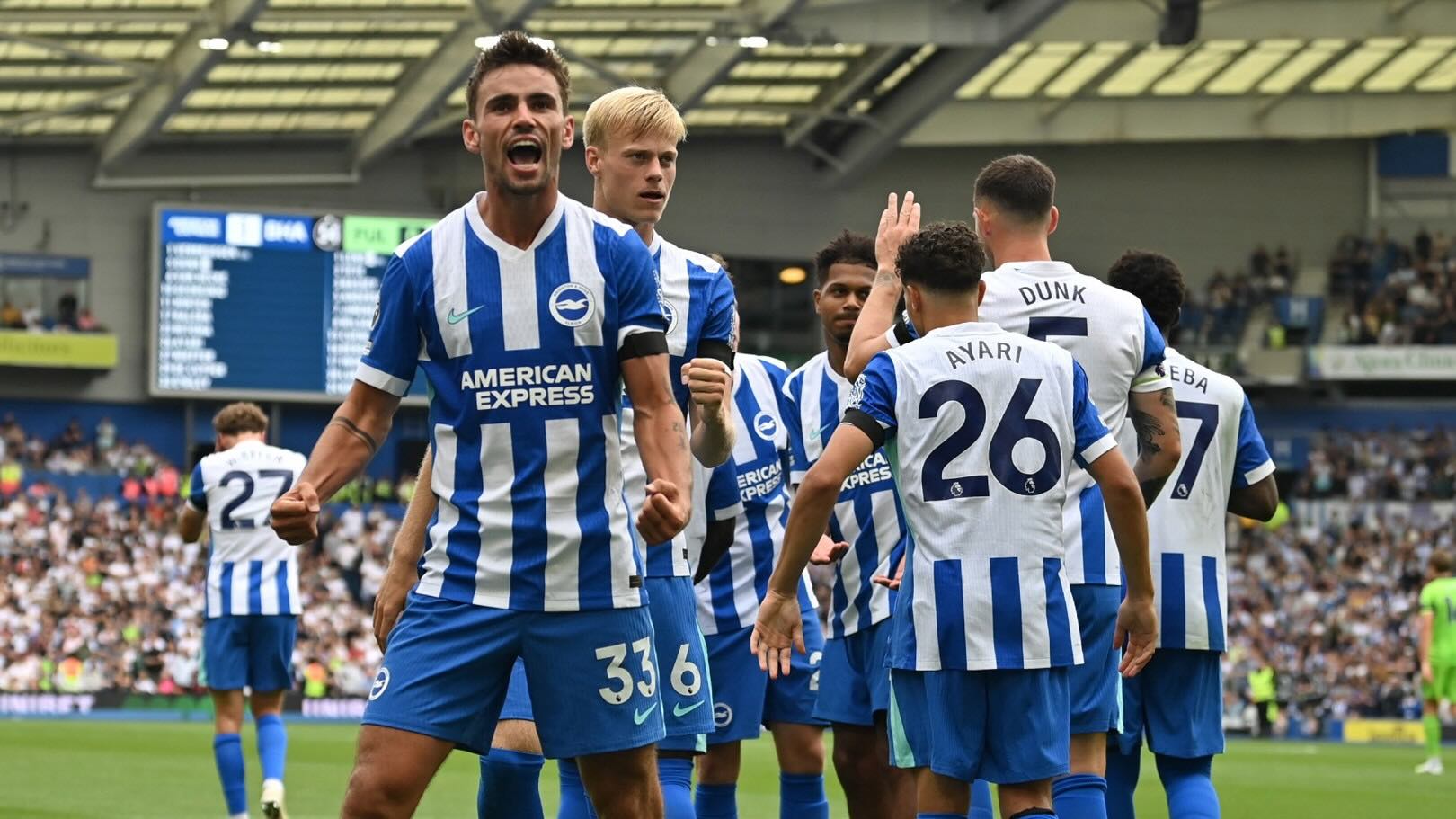
What makes the Benham and Bloom model so effective is that it does not stop at one club. Benham also owns a controlling stake in Danish side FC Midtjylland, which he transformed using the same principles, winning the Danish Superliga title within a year of his arrival and reaching the Champions League for the first time in the club's history. Bloom has since taken a similar interest in Belgian side Union Saint Gilloise, using it as a testing ground and feeder club where promising young signings can develop before stepping into the Premier League. The model, in other words, is not a one-off trick specific to English football. It is a repeatable system, transplantable across leagues and countries, provided the discipline behind it remains intact.
A Continental Cousin of the Same Idea
The same basic philosophy, spotting undervalued players before the wider market catches on and developing them systematically rather than chasing reputation, has also taken root in Austria and Germany, where the Red Bull network of clubs built an entire footballing pipeline around it. Red Bull Salzburg has become one of the most productive scouting operations in Europe, identifying young talent across South America, Africa and the Balkans well before rival clubs have taken notice, then developing those players inside a rigidly consistent high-pressing system before selling many of them on to RB Leipzig or elsewhere for significant profit. Players like Erling Haaland, Sadio Mane and Dominik Szoboszlai all passed through some version of this pipeline, arriving for modest fees and leaving for enormous ones, proof that the Moneyball principle scales just as effectively when applied to an entire multi-club network as it does to a single boardroom in west London. Union Berlin, meanwhile, built a Bundesliga qualification for European football on one of the smallest budgets in Germany's top flight, leaning on a similarly disciplined recruitment philosophy and a refusal to overspend chasing short-term fixes, further evidence that the model travels well beyond the Premier League whenever clubs have the patience to trust it.

When Spending Replaces Strategy
The counterexample is just as instructive, and considerably more common. For every Brentford or Brighton, there is a club that has mistaken volume of spending for a strategy in itself, and the results tend to follow a familiar pattern of expensive signings, muddled squad building and eventual regret.
Everton under Farhad Moshiri offers perhaps the clearest cautionary tale in the Premier League era. Since taking control in 2016, Moshiri oversaw the spending of well over half a billion pounds on transfers, a sum that would make most clubs genuine title contenders. Instead, Everton spiralled toward the relegation zone on multiple occasions, hampered by a revolving door of managers, directors of football and recruitment strategies that rarely aligned with one another. Signings like Gylfi Sigurdsson, Yannick Bolasie and Davy Klaassen arrived with fanfare and modest price tags dwarfed by their eventual cost, then delivered little before being quietly moved on, often for a fraction of their purchase price. The lesson from Everton's decline was never that spending money is inherently reckless. It was that recruitment without a coherent, consistent plan rarely produces anything sustainable, no matter how large the budget behind it.

Elsewhere in Europe, the pattern repeats with almost eerie consistency. Barcelona's post-Neymar spending spree, fuelled by the record fee received for the Brazilian's departure to Paris Saint-Germain, produced Ousmane Dembele and Philippe Coutinho, two enormously expensive signings who spent years failing to justify their price tags amid injuries and inconsistent form, before the club found itself in genuine financial distress despite, or perhaps because of, the money it had thrown at the problem. Manchester United's post-Ferguson era has become almost a case study in its own right, with hundreds of millions spent across successive transfer windows on players who rarely fit a cohesive tactical identity, because there so rarely was one to fit into. Each new manager arrived with a different philosophy, each recruitment cycle chased short-term fixes rather than long-term planning, and the squad became an expensive patchwork of mismatched parts rather than a coherent team.

The Real Lesson of Moneyball
The deeper truth beneath all of this is that Moneyball was never really about data for its own sake. It was about discipline, about resisting the urge to chase reputation, headlines or a manager's gut feeling when the numbers pointed elsewhere, and about having the patience to let a long-term plan play out even when short-term results look ugly. Brentford and Brighton have thrived not simply because they use data, plenty of wealthy clubs now employ enormous analytics departments too, but because they have built entire organizations willing to trust that data over instinct, and to stick to a philosophy across managerial changes, ownership pressure and the occasional bad transfer window.
Everton, Barcelona and Manchester United prove the inverse. Money can buy talent, but it cannot buy alignment, patience or a coherent plan, and without those things even a genuinely gifted squad tends to collapse into something less than the sum of its parts. Football, in the end, learned the same lesson baseball did two decades earlier. The market rewards the clubs willing to look where others are not looking, and it punishes, eventually and often expensively, those who assume that spending alone is a substitute for thinking.
The Most Popular ‘Bandersnatch’ Choices Show We're Not All Complete Monsters
BY: Taylor Hosking
The Most Popular ‘Bandersnatch’ Choices Show We're Not All Complete Monsters
BY: Taylor Hosking
The Most Popular ‘Bandersnatch’ Choices Show We're Not All Complete Monsters
BY: Taylor Hosking
suggestions
-

Sports News
Aiming for Tomorrow
How Virtual Reality and Esports Are Redefining the Future of Shooting Sports
-

Sports News
The Pharaohs' Hidden Reserve
Inside Egypt's Race to Recruit Its Diaspora
-

Sports News
Beating the Market
How the Moneyball Method Rewired Football
-

Sports News
Football Manager
How Football Manager Became Football's Unofficial Academy
-

Sports News
Outside the Court
How Meshref, Elghobashy Henfy and El Saiy - Are Shaping the Future of Youth.
-

Sports News
FIFA World Cup 2026
Football’s Biggest Stage Gets Even Bigger
Sports News
Aiming for Tomorrow
How Virtual Reality and Esports Are Redefining the Future of
Sports News
The Pharaohs' Hidden Reserve
Inside Egypt's Race to Recruit Its Diaspora
Sports News
Beating the Market
How the Moneyball Method Rewired Football
Sports News
Football Manager
How Football Manager Became Football's Unofficial Academy
Sports News
Outside the Court
How Meshref, Elghobashy Henfy and El Saiy - Are Shaping the
Sports News
FIFA World Cup 2026
Football’s Biggest Stage Gets Even Bigger